Syria

Web Review

2 August 2025

Multiple United Nations aid convoys have been delivered to Sweida in coordination with the Syrian Arab Red Crescent (SARC) and the International Committee of the Red Cross (ICRC).

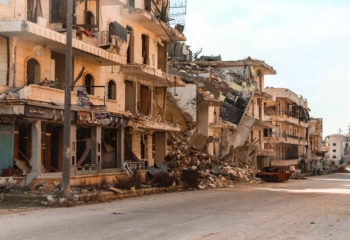
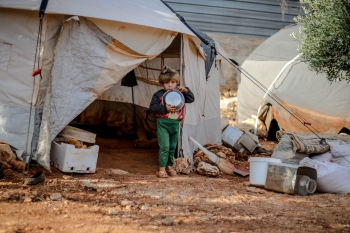
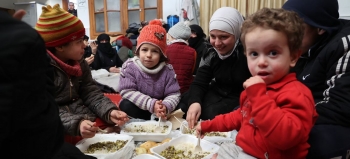
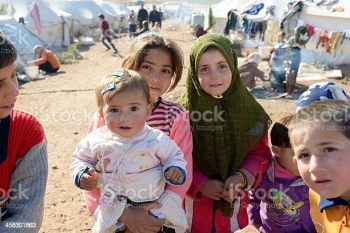
The humanitarian situation in Sweida is still critical due to the deadly sectarian violence that occurred in the previous weeks, starting on July 13, between the Druze and Bedouin communities. Syria’s presidency has deployed government forces to restore stability in the area; however, a large part of the population is still affected and displaced. Specifically, more than 145,000 people have been displaced, and some of them have even fled to neighbouring Dar’a and Rural Damascus governorates. In order to address the urgent needs of the affected population, the United Nations, in coordination with the SARC and the ICRC, has delivered aid to Sweida. Moreover, these organizations are also working to deliver assistance to people displaced in Dar’a and Rural Damascus.

The first convoy arrived on July 20. It included 32 trucks bringing food, water, medical supplies, and fuel provided by the UN World Food Programme (WFP), the UN Children’s Fund (UNICEF), and other partners. A second convoy from the SARC, in coordination with the United Nations Office for the Coordination of Humanitarian Affairs (OCHA), reached Sweida on July 23, carrying food, wheat flour, fuel, medicine, and health supplies. Another convoy was supplied by the ICRC and SARC on July 28. On July 30, the SARC also delivered four tankers carrying more than 120,000 litres of fuel.

The head of the ICRC delegation in Syria, Stephan Sakalian, said: “To understand better and further respond to the most pressing needs, the ICRC deployed a multidisciplinary team on the ground. In close cooperation with the SARC, whose staff and volunteers have been doing outstanding work since the onset of the crisis, under extremely difficult circumstances, our teams spoke with families, community leaders, and health workers to identify what they need most”. 

According to OCHA’s latest update, a fifth humanitarian aid convoy organized by the Syrian Arab Red Crescent also arrived in Sweida on July 31. The convoy, which included 40 trucks, was the largest so far: it delivered medical supplies, flour, fuel, canned goods, hygiene kits, and shelter materials.

Di Sonia Iovine


To read more, please visit:

https://english.aawsat.com/arab-world/5169955-fourth-aid-convoy-reaches-syrias-sweida 

https://news.un.org/en/story/2025/07/1165547 

https://www.icrc.org/en/news-release/syria-icrc-gains-access-sweida-calls-sustained-humanitarian-response 

https://www.aljazeera.com/news/2025/7/28/aid-arrives-in-syrias-suwayda-as-un-says-humanitarian-situation-critical

30 July 2025

Ongoing violence has been reported in Syria’s Suweida governorate: hospitals are overwhelmed, civilians are being displaced, and humanitarian aid is blocked.

Sectarian violence involving the Druze and Bedouin communities erupted on 12 July in Suweida governorate, southern Syria, triggering an intervention by Syrian security forces. Several incidents have also occurred on 15 July and 18 July, as reported by the Office of the United Nations High Commissioner for Human Rights (OHCHR) and United Nations Office for the Coordination of Humanitarian Affairs (OCHA). Hundreds of civilians were reportedly killed or abused by members of the security forces, individuals affiliated with the interim authorities and other armed elements, including Druze and Bedouin. 

Ravina Shamdasani, OHCHR spokesperson, expressed concern about serious human rights abuses, such as summary executions, arbitrary killings, kidnappings, destruction of private property and looting of homes in the city of Suweida. Specifically, at least 13 people were killed in an incident on 15 July by armed individuals affiliated with the interim authorities, who opened fire during a family gathering. Unfortunately, hospitals are severely overwhelmed and unable to deal with the high number of injured civilians. 

Khaled Khiari, UN Assistant Secretary-General, also reported that civilians, religious figures and detainees are being subjected to extrajudicial executions and humiliating treatment, urging all parties to protect civilians and civilian infrastructure. Ms. Shamdasani stressed that OHCHR has been trying to verify the information through “contacts on the ground… families of people who were killed, eyewitnesses”. Nevertheless, obtaining reliable estimates of the death toll remains challenging. She said that “there's a lot of disinformation out there and a lot of it is being used to incite further violence to inflame tensions.”

On 18 July, Syria’s presidency stated that it would deploy forces in Suweida governorate to restore stability and prevent new clashes through a combination of political and security measures. On the same day, OCHA reported that several people were trying to flee or had fled the area due to ongoing clashes. According to the latest updates from OCHA, on 17 July, nearly 2,000 families were displaced from areas affected by the fighting. The displaced civilians are in desperate need of blankets, fuel and solar lamps. However, distributing aid has been extremely difficult due to insecurity. William Spindler, UNHCR spokesperson, said: “We have this in stock and we are ready to deliver it as soon as the security allows it. For now, this has not been possible.” Mr. Spindler was also concerned about a UNHCR office located in rural Suweida, whose infrastructure and personnel have been affected by the hostilities. Moreover, a warehouse of the Syrian Arab Red Crescent was damaged by shelling. UNHCR spokesperson called on all parties to the conflict to respect and protect humanitarian premises, personnel and assets.
Di Sonia Iovine


To read more, please visit: https://www.unognewsroom.org/story/en/2727/syria-sweida-violence-ohchr-unhcr-18-july-2025 

https://www.aljazeera.com/news/2025/7/18/israel-reportedly-targets-bedouin-convoy-in-syria-after-attacks 

14 July 2025

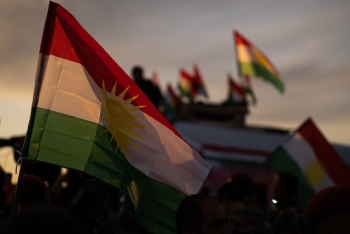
Turkish drone kills ten Kurdish civilians in Kobane amid rising international concern

On March 16, 2025, a drone airstrike—allegedly carried out by Turkey or Turkey-backed Syrian militias—hit a farm near Kobane, in northern Syria, killing ten Kurdish civilians, including seven children, an 18-year-old girl, and their parents. The incident was reported in a Human Rights Watch report published on May 29, raising serious questions about the conduct of the parties involved and compliance with international humanitarian law in one of the Middle East’s most volatile regions.

The victims belonged to the Abdo family, who had no known ties to armed groups, except for the eldest daughter, Ronida, who reportedly joined the Kurdish police forces (Asayish) in 2024. According to local witnesses, the strike occurred near former positions of the Syrian National Army (SNA), a coalition of militias backed by Turkey, now partially integrated into the armed forces of Syria’s transitional government. The targeted area remains under the control of factions affiliated with the now-disbanded SNA.

The attack came just days after a landmark agreement between Syrian President Ahmed al-Sharaa and Syrian Democratic Forces (SDF) Commander Mazloum Abdi. The deal, to be implemented by the end of the year, includes formal political recognition of the Kurdish community, joint control over key infrastructure (such as airports and gas fields), the integration of the SDF into the national army, and the return of displaced persons.
The incident drew international attention at a particularly sensitive moment: Turkey continues to play an ambiguous role, supporting armed groups in Syria that frequently operate with impunity, while promoting a narrative of regional stabilization at the diplomatic level. Human Rights Watch has called for an independent investigation, emphasizing Ankara’s complicity as a supplier of weapons, training, and logistical support to these factions. International organizations and Western governments are urging Syria’s transitional authorities to establish a unified military command under civilian oversight and to ensure full compliance with humanitarian norms.
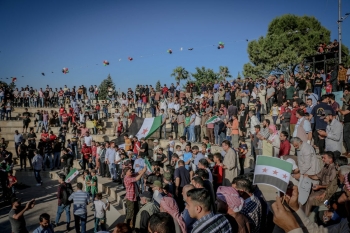
This episode underscores the ongoing toll of the Syrian conflict on civilians and the persistent challenge it poses to the rules-based international order.

Di Viviana Ciucci


Read more:

https://www.hrw.org/news/2025/06/05/syria-turkiye-backed-attack-kills-injures-family

https://www.internazionale.it/ultime-notizie/2025/03/11/siria-accordo-governo-amministrazione-autonoma-curda

https://www.reuters.com/business/energy/turkish-energy-minister-says-socar-may-become-partner-providing-gas-syria-2025-07-09/


29 October 2022

Women are gaining an increasingly important role in mediation and negotiation processes.

In Syria, the long fighting of the civil war has worsened the political, economic and social state of the country to the point of prompting countless citizens to leave their homes and/or country. So far, the efforts of collaboration and mediation by the international community have been in vain due to misunderstandings and hostility between formal mediators in local communities. However, the role of women – in this case of Syrian women – has reached a level of remarkable importance.
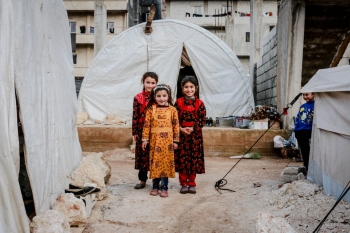
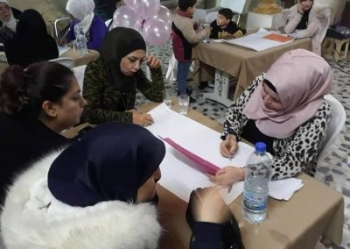
Syrian women are often involved as “internal mediators” within a controversy as they are trusted and credible on both sides. They are also credited with the ability to both build and exploit relationships, and the possession of accurate and detailed information about the parties of the dispute.
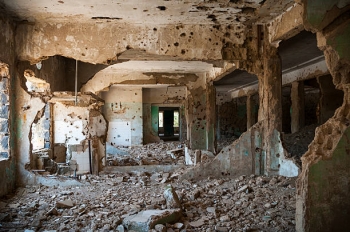
At the beginning of the war, for instance, the district of Zabadani (northwest of Damascus) had become the centre of clashes between the government and the opposition forces. Because of the restrictions on freedom of movement faced by men, the involvement of women in negotiations for a ceasefire with government authorities became not only acceptable, but necessary. Referring to this fact, peace-building expert Sameh Awad explains that women in Zabadani had intervened to protect their husbands from government research operations.

A similar case is that of the north-western city of Idlib where the mediation skills of a group of women allowed the release of prisoners sentenced to death. In Damascus, the exponential growth of violence against internally displaced persons (IDP) has led Mobaderoon, an organization composed of women, to take a crucial role in the process of restoring stability, security and social cohesion. Their commitment to the formation of local committees and the creation of neutral spaces has facilitated the acceptance of displaced persons and, subsequently, the increase of economic opportunities.
To read more, please visit:

  • https://news.un.org/en/story/2022/10/1129972
  • https://www.unwomen.org/en/news-stories/feature-story/2022/10/how-syrian-women-navigate-security-risks-to-mediate-local-conflicts
  • https://iraq.un.org/en/188075-womens-participation-local-mediation-lessons-iraq-libya-syria-and-yemen
  • https://www.wilpf.org/ways-syrian-women-must-be-included-in-the-upcoming-peace-talks/
  • https://icanpeacework.org/2019/01/syrian-women-peace-process-argument-inclusion/
  • https://icanpeacework.org/2020/11/innovative-peace-story-syrias-mobaderoon/

by Alessia Bertola

Page 1 of 4